Glorious Conclusion
Hey, we're done.

Congratulations, you’ve finished the book. Thanks for reading. As a wannabe artist, I’m sure if a painter had just finished a new work and vagrants broke into his home, before they left she would say, “So, what do you think of this picture?” That’s the life of a wannabe. Every artist needs an audience.
Heartfelt appreciation goes to everyone who helped with this project. From editing, to criticism, to encouragement — it’s been a long haul.
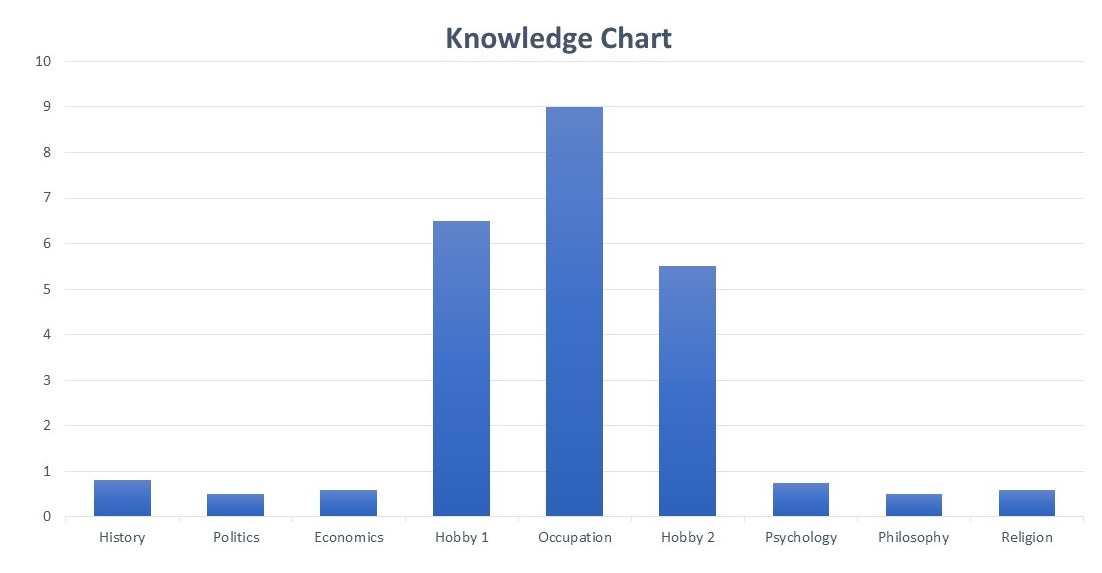
The original idea was to create a basic adult education, with absolutely no plan of how to get there. What started out as history, quickly moved into politics and religion. Who knew? The section on economics is thanks to my undergrad, though little came from schooling. With regards to psych, philosophy, and religion, I haven’t studied enough in these areas to be proficient but I can say this: most of those guys weren’t geniuses. They claimed all sorts of nonsense on their way to brilliant assessments (that someone would have discovered anyway). At any rate, nobody listened. Commies didn’t stop killing because of what Nietzsche said.
It’s also obvious that mankind is born in sad shape, which brings us to the idea of original sin. Some say it’s because we’re too animal-like, others maintain it’s our ability to do evil. My favourite is from M. Scott Peck, who suggests we’re all lazy. He says laziness is what stops us from developing our minds.
Socrates said the only evil is ignorance and he’s 95% right. Ignorance is the cause of most confusion. It’s not like we’re not smart. Lots of us are smart — just look at the jobs we do. The problem lies in definitions we’re not taught. What is a liberal? Who is a conservative? And what’s with all these religious people? Missing definitions is why we never get to the next level. That’s why books of this nature are valuable. We need a faster way of getting there.
Having always been half smart and half stupid, I was perfect for this project. Most intellectuals speak with a magnitude of long words — using vocabulary as a barrier to deep learning. I appreciate the approach of a layman’s tongue. One that professes you needn’t know every detail, just give me the gist.
Getting to One
We opened by stating that in order to say something we must begin with two definitions. One is smart, the other intelligence. Let's define smart as the ability to learn. It's no secret everyone isn't the same in this regard. Some are adept at following complicated arguments and retaining mountains of information while others are not. But everyone has the ability to learn and we do it our own way. That's smart.
Intelligence is the fact you know something. Whether it's jobs or a hobby, everyone gravitates toward certain details. So here's the situation: smart people don't know enough about public topics and since many of them are discussed at dinner, it sure would be nice to have intelligence sitting at the table. But because we're naturally lazy, we take shortcuts. Shortcuts that make us no more intelligent than someone who isn't considered smart in the first place.
#1. Smart is a natural ability or talent. Intelligence comes by use of it.
The Vase
Then we had an article on common knowledge. It went like this: I was walking in Zambia arguing with a street kid when he used the expression, “We’re not coming from the same vase.” I said what do you mean vase? He explained.
In Zambia, homes often display fresh cut flowers. People there make a distinction between the part standing inside the glass and what grows above it. Call them stem and bud. Partway through, I figured his point was there’s a difference between buds coming from the same vase and those growing in dirt 5,000 miles away, but we’re all flowers. He said, “No” and “stop interrupting.”

It means you can’t see my point because you don’t hold the same base understandings. Inside the vase is what’s shared by many, parts above it are individual interpretations. So flowers coming from the same vase totally get each other. Those coming from a crack in the wall, don’t. You’re allowed to think differently, that’s why all buds don’t point the same way, but those differences should be coming from the same sources.
#2. We need universal definitions to get to the next level.
Was it worth it?
Now that it’s over, the question becomes was this project worth it? 30,000 pages, hours of watching videos and courses, not to mention all the fights with friends. Was it really worth it? My answer is yes and no. If you don’t care about these sorts of issues, you’re fine. Every citizen needn’t serve as public watchdog. And if you’re good with personal belief, this book was a waste of time. But if you wish to hold certain strong opinions, you ought to know something about these areas. So here’s the rub.
Civilizations come in three levels: political at the top, economic in the middle, and cultural to hold everything up. Without common culture we have nothing and belief isn’t ideology (though rotten power-seekers often attempt to merge the two). How you vote says nothing about you. Nice people don’t vote one way and bad people another. That’s a ridiculous statement brewed in propaganda. If you need status outside of general citizenry and being an Earth traveler, get a BMW. And if you need purpose beyond doing a good job and helping the planet spin, buy a pet.
#3. Propaganda works because we don’t understand psychology.
The world will not topple because democracy isn’t installed everywhere. Many nations are not ready for it. Same goes for economics. Every place needn’t use the exact same system. But belief is a big deal and so is organization.
We’ll always want leaders who are competent and confident, but most of who we host today are not impressive. And I’m afraid unorganized. It’s like nobody knows the plan. And if they do, it’s not being shared among the populace. This could be due to senior positions becoming too complicated but I also don’t see our best stepping forward. Maybe we should educate more on the ways of the world and develop a contingent that stays on the same page.
#4. The ways of the world shouldn’t be hidden.
Closing
The last free opinion is this: it’s amazing how poorly educated we are in these six areas. Don’t know if it’s by design or based in incompetence, but if I were king there would be changes. Most of us are grasping at straws while trying to understand the news and there isn’t much for assistance. Speakers keep talking like salespeople, never providing background or leaving room for humility. And I think it’s all nuts.
I believe we could be more organized. Maybe not everyone and not everywhere, but more people in the West should know why we have democracy and how we got here, which are the common beliefs held by all parties and what’s left to fight for, and what are my options when it comes to religion. I also think people should know more about the human condition. It’s not complicated.
Thanks again, for reading. This is the best I can do. Hopefully you got something from this course. Truth is, most information gets forgotten. Unless you use knowledge on a repetitive basis, it disappears over time. And it’s always quite the effort to acquire in the first place. One of life’s little mysteries.